The Sun: a starting symbol
In tropical astrology, the Sun’s sign is determined by its ecliptic longitude at the moment of birth. Popular date lists are approximations: the Sun changes signs at a particular instant, which varies by year and is displayed differently across time zones.
A person born close to a sign boundary needs an actual calculation. Being “on the cusp” does not automatically mean the Sun occupies two signs. A reading can explore neighbouring themes without changing that geometry.
The Moon: a faster-moving placement
The Moon moves through the zodiac more quickly than the Sun. An unknown time can therefore leave its sign uncertain. A good tool communicates that uncertainty instead of choosing whichever sign sounds more appealing.
Astrological Moon interpretations often discuss habits, needs and emotional responses. Those are symbolic associations, not a clinical description or a way to assess someone’s mental health.
The rising sign: time and place matter
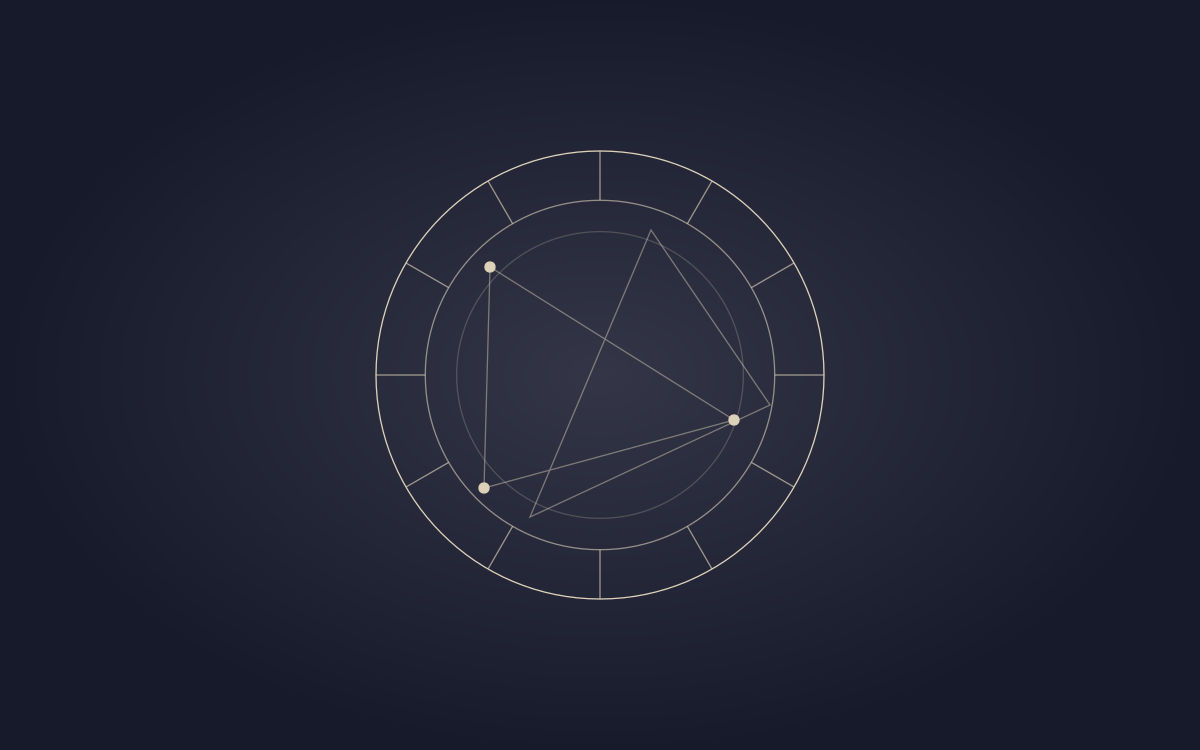
The ascendant is linked to the eastern horizon at a particular moment and location. It requires reliable time, place and historical time-zone handling. Using noon as a substitute for an unknown time does not produce a reliable rising sign.
Our introductory planetary tool shows geocentric positions for a known time. It does not calculate houses or an ascendant. This boundary keeps the result narrower than a complete chart, and makes the distinction clear.
Keep the reading open
If a symbolic description feels interesting, ask when it is useful and when it is not. You may find that the question matters more than the label. No combination of placements can determine your worth, a relationship’s future or a person’s character.
Bring the question into your own life.
Start with a free perspective, or find a simple ritual that suits today.
Begin your discovery